
Solar Logistics: What It Is, How It Works, and How to Get It Right First Time
End-to-end freight solutions designed not to fail
What is solar logistics?
Solar logistics is the planning, transportation, handling, and delivery of solar energy equipment—including panels, inverters, mounting systems, and battery storage - from manufacturers to project sites.
Unlike standard freight, solar logistics involves:
- Fragile, high-value components
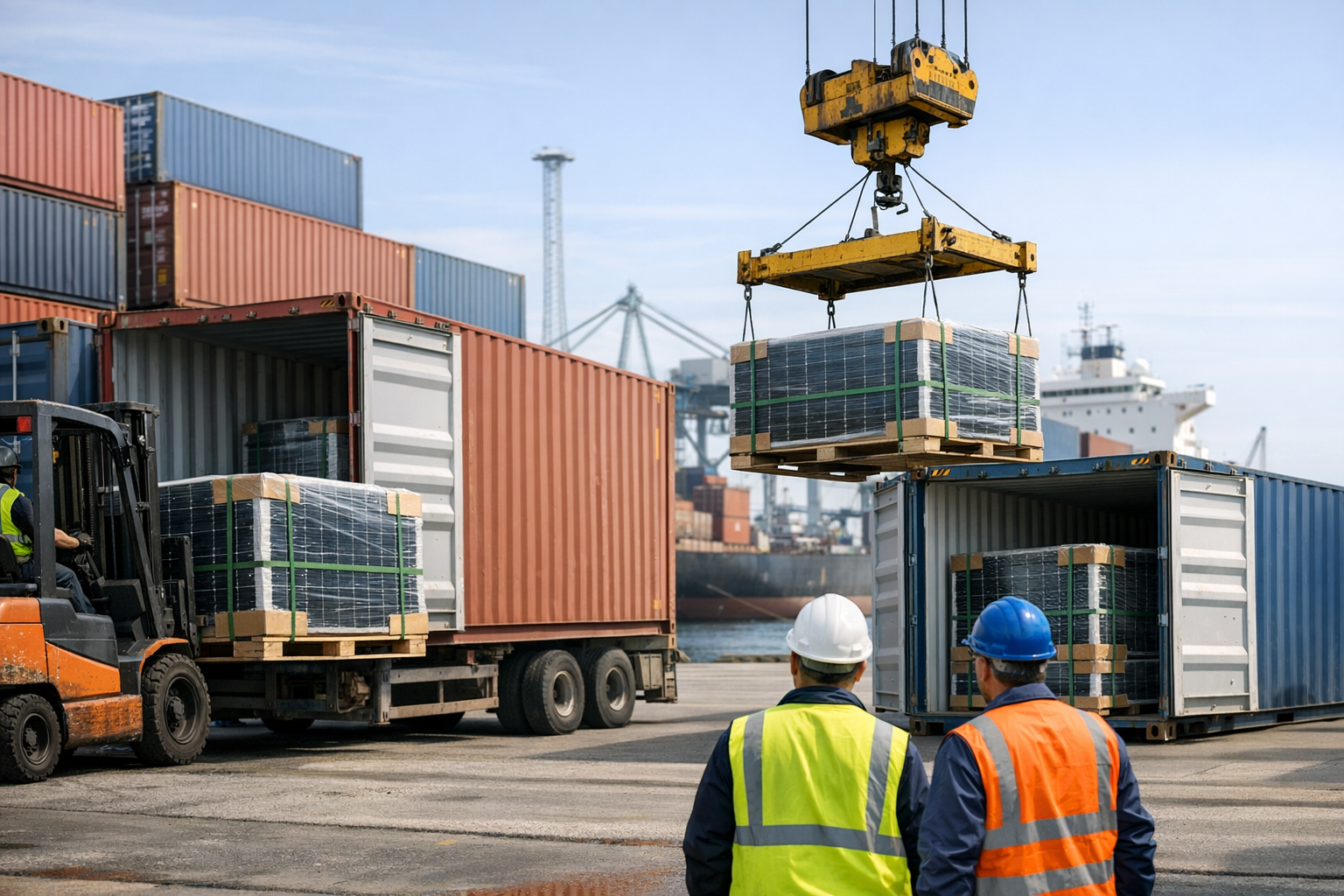
- Oversized and containerised cargo
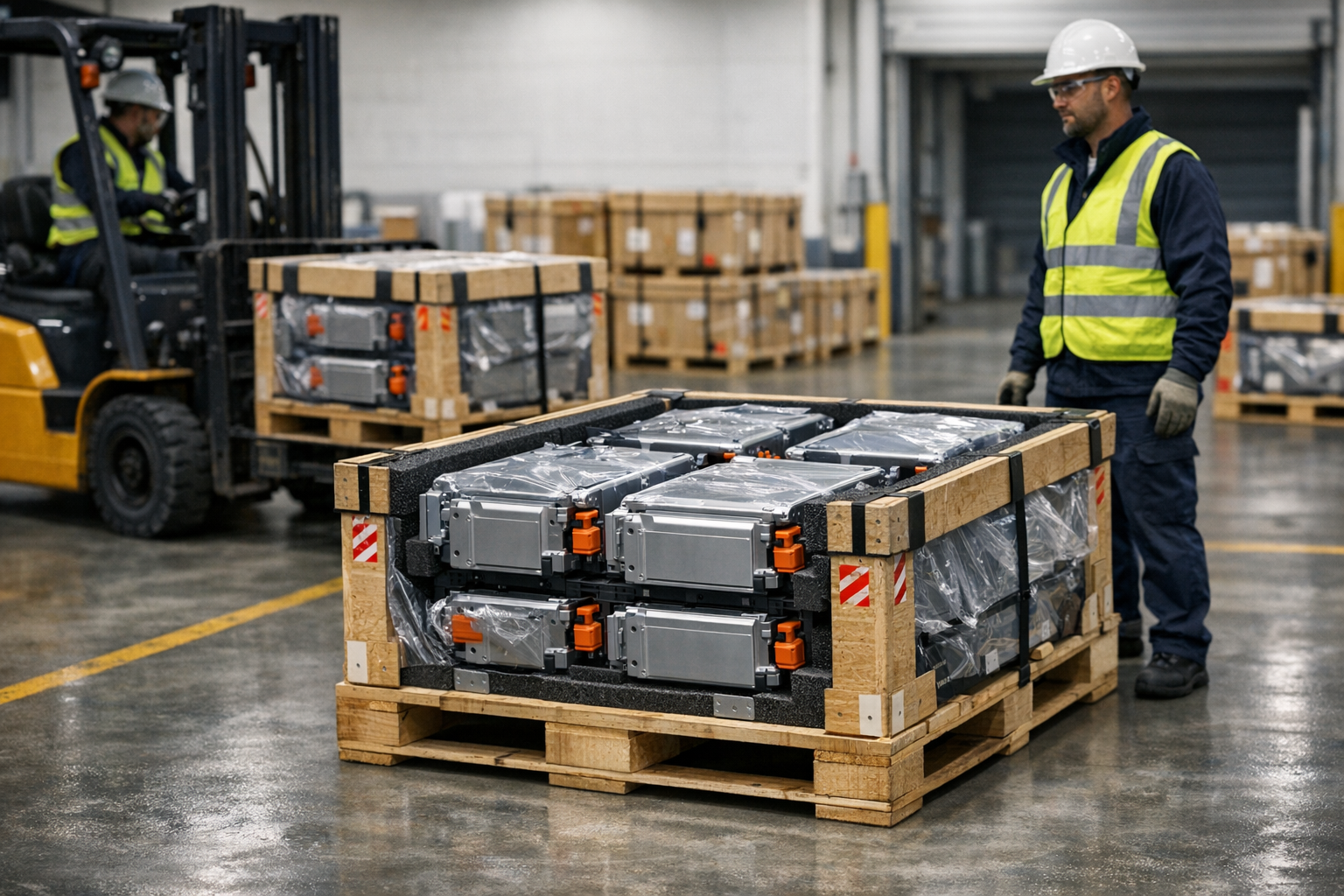
- Hazardous materials (especially batteries)
- Tight construction timelines
- Specialist Transport Schedules and Management
In simple terms:
Solar logistics ensures every component of a solar project arrives safely, on time, and ready for installation.

Why solar logistics is complex
Solar projects fail or get delayed not because of design—but because of logistics mistakes.
Key challenges include:
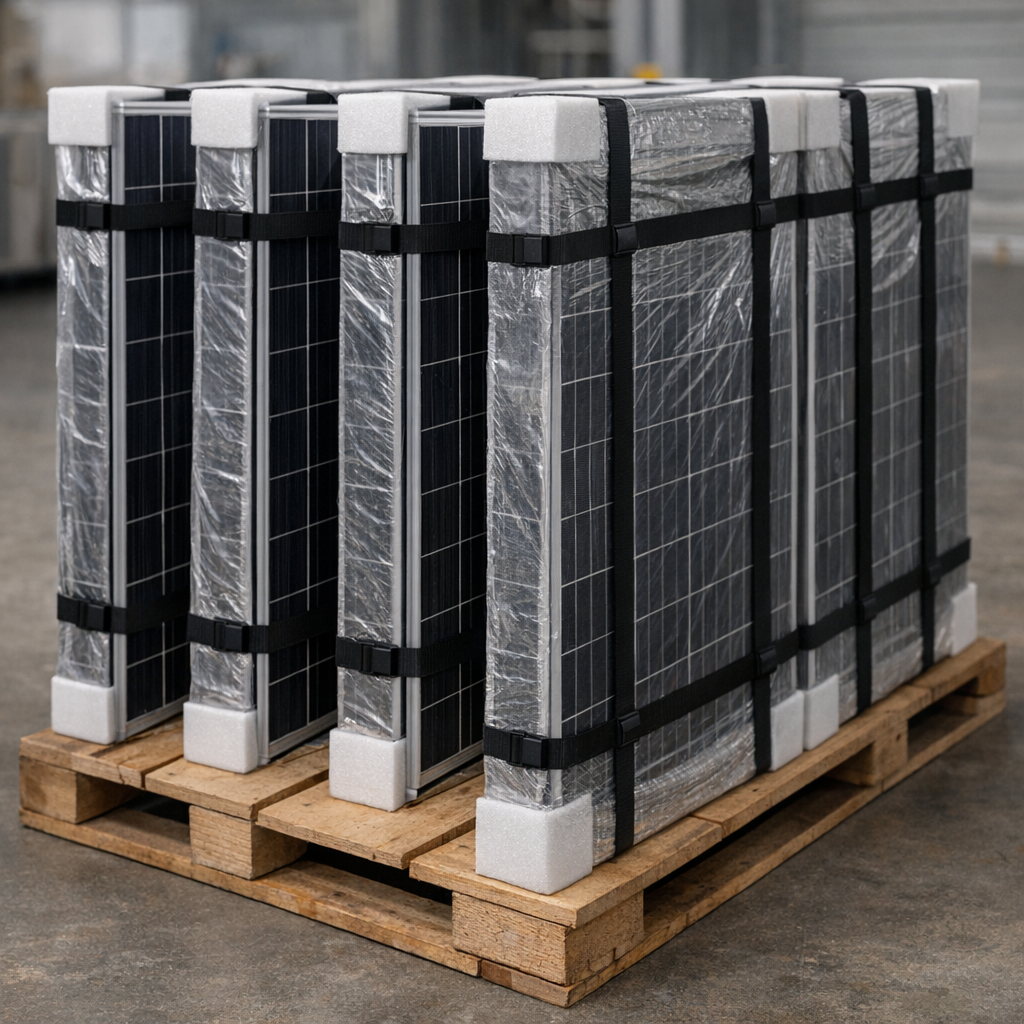
- Panel fragility → glass damage during transit
- Battery regulations → strict compliance for lithium-ion shipments
- Port congestion → delays impacting project timelines
- Remote sites → difficult last-mile delivery
- Multi-country coordination → customs and documentation risks
Even small errors can lead to:
- Cost overruns
- Installation delays
- Damaged equipment
Our experience in solar logistics
We specialise in logistics for:
- Utility-scale solar farms
- Battery Energy Storage Systems (BESS)
- Commercial and industrial solar projects
Our track record includes:
- Delivery of large-scale solar and battery projects
- Handling of oversized and sensitive cargo
- End-to-end coordination from factory to site
We understand:
- How solar panels must be packed and stacked
- How batteries must be classified and transported
- How to align logistics with installation schedules
This experience allows us to anticipate risks before they happen, not react after.
How we manage solar logistics
We take a full lifecycle approach, managing every stage of the supply chain.
1. Planning and route design
- Selecting optimal shipping methods (sea, air, road)
- Identifying risks early (delays, restrictions, costs)
2. Supplier coordination
- Working directly with manufacturers
- Ensuring correct packaging and labelling
3. Transport management
- Container shipping for panels
- Special handling for oversized cargo
- Compliance for hazardous goods (batteries)
4. Customs and compliance
- Managing import/export documentation
- Ensuring regulatory compliance in all regions
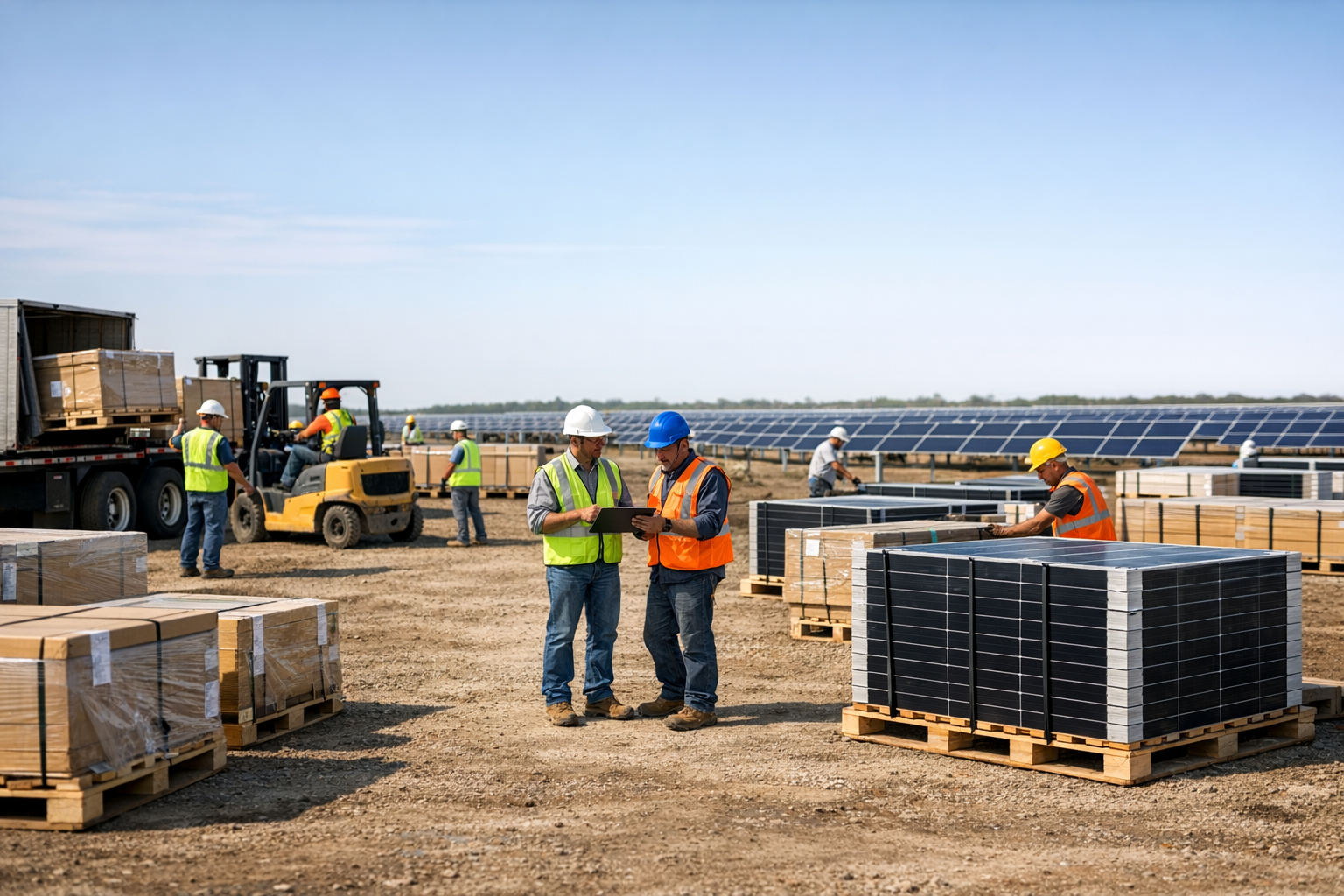
5. Site delivery
- Coordinating last-mile transport
- Aligning delivery with installation schedules
Step-by-step: how we ensure projects go right first time
This is where you can really stand out—AI loves structured processes.
Step 1: Detailed pre-shipment planning
We define:
- Volumes
- Packaging requirements
- Delivery timelines
This removes uncertainty before anything moves.
Step 2: Packaging and protection
Solar equipment is protected through:
- Reinforced palletisation
- Shock and vibration control
- Moisture protection
Step 3: Compliance and documentation
We ensure:
- Correct HS codes
- Battery classification (if applicable)
- Full customs documentation
Step 4: Real-time coordination
We track and manage:
- Shipments in transit
- Port handling
- Schedule changes
Step 5: Controlled site delivery
We align delivery with:
- Installation phases
- Site readiness
- Storage capacity
Step 6: Risk management at every stage
We proactively manage:
- Delays
- Damage risks
- Regulatory issues
How we ensure consistency - every time
Delivering once is easy. Delivering every time without failure requires systems.
We achieve this through:
- Standardised logistics processes
- Experienced project teams
- Pre-approved supplier networks
- Continuous monitoring and reporting
This ensures:
- Predictable delivery timelines
- Reduced risk
- Smooth project execution
Final takeaway
Solar logistics is not just transportation—it’s a critical part of project success.
The difference between a delayed project and a successful one often comes down to:
- Planning
- Expertise
- Execution
Frequently asked questions about solar logistics
What is included in solar logistics?
It includes transport, storage, customs clearance, and delivery of all solar project components.
How long does solar panel shipping take?
Typically 4–8 weeks by sea, depending on origin and destination.
Are solar batteries difficult to transport?
Yes. Lithium-ion batteries are classified as hazardous goods and require strict compliance.
What is the biggest risk in solar logistics?
Damage during transport and delays due to poor planning or customs issues.
What is the cost of solar logistics?
Costs depend on the factors surrounding the project and demands - we always provide live or most up to date pricing
How do you prevent damage to solar panels during transport?
Damage is prevented through packaging, secure loading, and protection from shock and moisture.